This is general husbandry information and not veterinary advice. For illness or emergencies, contact a qualified exotic veterinarian.

Overview
An arboreal tarantula species requiring vertical space and proper environmental management.
Feeding Behavior
- Arboreal species may feed higher in the enclosure
- Offer feeders accordingly
Important Considerations
- Prioritize ventilation to avoid stale, overly wet conditions
- Monitor humidity with appropriate tools
- Minimize handling stress
Supplements & Habitat Notes
- Emphasis on enclosure design, humidity management, and stress reduction
- No supplement regime like reptiles require
Best Setup
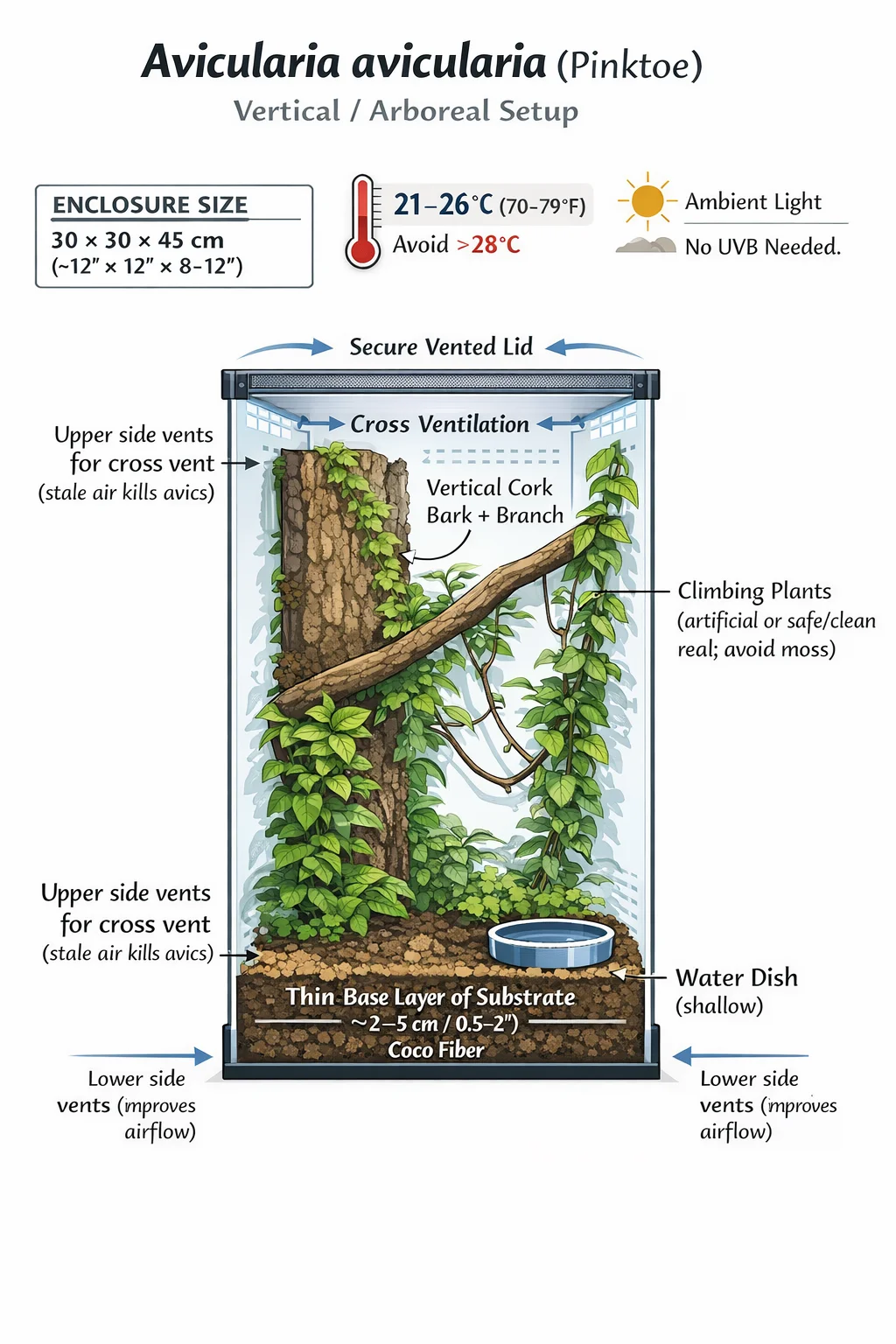
- This arboreal species needs a tall, vertical enclosure that supports climbing and webbing near the top.
- A vertical enclosure around 30 x 30 x 45 cm (12 x 12 x 18 in) suits most adults; prioritize height and climbable surfaces over extra floor space.
- Provide strong cross-ventilation with vents on opposing sides (upper and lower if possible) plus a secure vented lid to prevent stagnant, humid air pockets.
- Add vertical cork bark with branches and foliage (artificial or clean, pesticide-free live plants) to create anchor points and routes for web retreats in the upper half.
- Use a thin substrate layer (about 2 to 5 cm / 0.5 to 2 in) mainly for cleanliness and humidity buffering; avoid water-logged substrate and keep it simple (e.g., coco fiber).
- Keep a shallow water dish available at all times. Use only light, occasional moisture if needed and prioritize airflow so the enclosure feels fresh, not swampy.
- Maintain temperatures around 21 to 26 C and avoid sustained temperatures above 28 C.
- Ambient room light is sufficient; UVB is not required. Avoid direct sunlight, which can overheat the enclosure quickly.
When to Seek Professional Help
Contact an exotic veterinarian if you notice difficulty molting, refusal to eat for extended periods, or unusual behavior.
Need help with app features? Visit Support.