This is general husbandry information and not veterinary advice. For illness or emergencies, contact a qualified exotic veterinarian.

Overview
The leopard gecko is a terrestrial species native to arid regions. They require specific environmental conditions to thrive in captivity.
Feeding Behavior
- Primarily insect-based diet
- Feeding frequency varies by age and body condition; juveniles typically eat more frequently than adults
- Use well-fed (gut-loaded) feeder insects
- Offer insects at appropriate size for the gecko
Important Considerations
- Keep enclosure dry overall; the humid hide provides targeted moisture
- Wash hands after handling reptiles to maintain proper hygiene
- Monitor temperature gradients regularly
Supplements & Habitat Notes
- Calcium and vitamin/mineral supplementation are commonly recommended for insect feeders
- Supplementation approach differs based on UVB usage
- Ensure proper substrate and hide placement
Best Setup
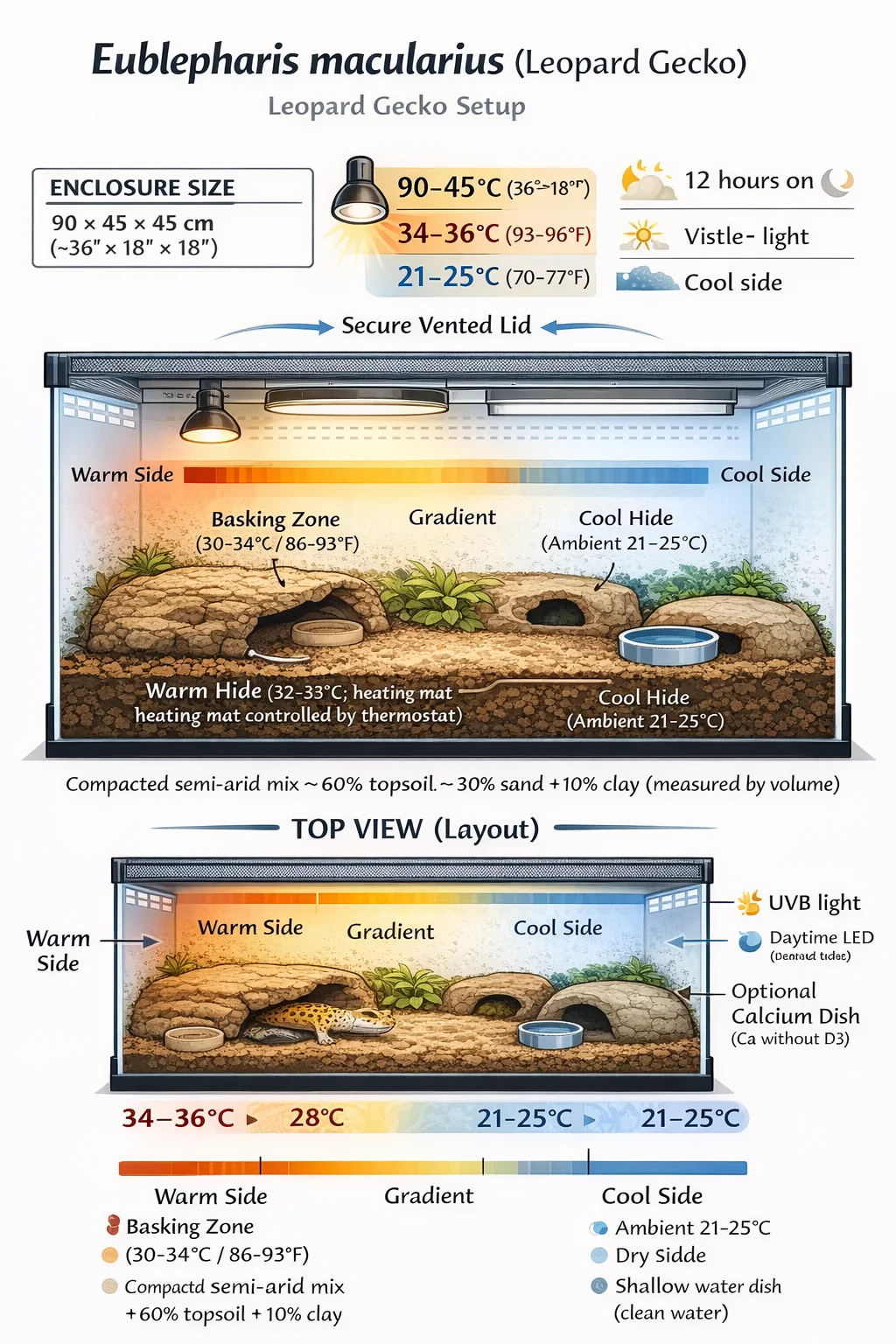
- Ground-dwelling species: prioritize floor space and a stable heat gradient over height, with a larger low-stress enclosure for hides and enrichment.
- Adult baseline enclosure: about 90 x 45 x 45 cm (36 x 18 x 18 in) with a secure, escape-proof lid.
- Stabilize decor (especially heavy rocks) and place it on the tank floor so digging cannot shift it.
- Create a warm and cool side with thermostat-controlled heat sources.
- Warm basking surface: 34-36 C; warm hide: 32-33 C; cool end: 21-25 C.
- Some setups use a slightly cooler basking zone (about 28-30 C) with a cool end around 24-26 C depending on equipment and measurement method.
- Provide a consistent day/night cycle (about 12 hours on, 12 hours off). Low-output UVB can be beneficial when set up as a gradient.
- Keep ambient humidity around 30-40 percent with a humid hide at 70-80 percent inside the hide to support shedding.
- Use a packed, dig-friendly semi-arid substrate: 60 percent organic topsoil, 30 percent sand, 10 percent clay by volume, allowed to dry before use.
When to Seek Professional Help
Contact a qualified exotic veterinarian if you observe prolonged loss of appetite, difficulty shedding, lethargy, or any signs of illness.
Need help with app features? Visit Support.